Pokie Machines in Australia: Rules, Odds and Play
 Available in AU

A practical look at Australian rules, game features, odds, free play and the limits of payment and jackpot claims.
Table of Contents
- Online Pokies in Australia: What the Rules Actually Say
- What Changes from One Pokie Machine to Another
- Free Pokie Play: Useful Practice, Not a Preview of Your Luck
- Casino Pokies: What You Can Check on a Perth Machine
- Game Features, Networked Jackpots and Feature Buys
- Pokie Odds: What a Spin Can—and Cannot—Tell You
- Real-Money Play: The Payment and Withdrawal Catch
- Pokie Apps and the Jackpot Label
- New Pokie Names and What a Feature-Buy Game Really Offers
- RTP and a Couple of Tips I Wish I’d Taken Earlier
Online Pokies in Australia: What the Rules Actually Say
The legal line is easy to blur when a website loads, a game opens and the buttons look familiar. But access is not the same as approval. In Australia, no local licence is available for a business offering real-money online pokies to residents. The fact that an offshore site accepts Australian visitors does not make its service legal here.
The key law is the Interactive Gambling Act 2001. It makes it an offence for an operator to provide real-money online pokie machine games to people in Australia. That covers the service being offered, not just the name on a particular game. Whether the page calls its products pokies, slots or casino games does not change the central issue: real-money online casino-style games cannot legally be supplied to customers located in Australia.
That distinction matters because the operator’s position and the player’s position are not the same. An Australian resident who plays real-money pokies online with an offshore operator does not commit an offence under this Act simply by playing. The law targets the operator providing the prohibited service. I used to assume that if a site was reachable, the risk must be shared equally. It isn’t.
Choosing a pokie machine site for Australia in 2026 means weighing the details that matter to you, such as licensing, deposit minimums and payout timing. Use these notes to see what is specifically known about each option before deciding where to play.
1. Uptown Pokies
License: Curacao (operating since 2017) · Min. deposit: A$20 You can note that Uptown Pokies has operated since 2017 under a Curacao licence, with a minimum deposit of A$20.
2. GoldenCrown
License: Curacao Gaming Control Board OGL/2023/176/0095 (Hollycorn N.V.) You can check its stated licensing details: GoldenCrown is licensed by the Curacao Gaming Control Board under OGL/2023/176/0095, with Hollycorn N.V. named.
3. DragonSlots Casino
License: Curacao Gaming Authority (Jumpman Gaming Ltd) You can note that DragonSlots Casino is licensed by the Curacao Gaming Authority, with Jumpman Gaming Ltd named.
4. MrPacho
Payout speed: crypto 30-120 minutes, fiat 24-72 hours · Min. deposit: A$30 You can consider the stated payout times: crypto withdrawals take 30–120 minutes and fiat withdrawals 24–72 hours. The minimum deposit is A$30.
5. Ricky Casino
Payout speed: crypto under 1 hour, PayID 1-3 business days · Min. deposit: A$20 (A$30 to qualify for the bonus) You can note that crypto payouts are stated as taking under an hour, while PayID payouts take 1–3 business days. The minimum deposit is A$20, or A$30 to qualify for the bonus.
6. Lucky Dreams
License: Curacao · Min. deposit: A$20 (POLi) You can note that Lucky Dreams is licensed in Curacao and has a A$20 minimum deposit for POLi.
7. Playfina Casino
License: Curacao eGaming (Hollycorn N.V., since 2017) · Min. deposit: A$20-30 (depends on the offer) You can note that Playfina Casino is licensed by Curacao eGaming, with Hollycorn N.V. named, and has been operating since 2017. Its minimum deposit is A$20–30, depending on the offer.
8. JustCasino
License: Curacao Gaming Control Board You can note that JustCasino is licensed by the Curacao Gaming Control Board.
9. JeetCity Casino
License: Curacao eGaming (Dama N.V.) You can note that JeetCity Casino is licensed by Curacao eGaming, with Dama N.V. named.
10. Wild Tokyo
License: Curacao · Payout speed: crypto 30-60 minutes, fiat 1-5 days · Min. deposit: A$10 You can note that Wild Tokyo has a A$10 minimum deposit. Its stated payout times are 30–60 minutes for crypto and 1–5 days for fiat.
That does not mean an offshore website has Australian approval, or that a player gets the protections available in a locally regulated gambling market. There is no Australian online-pokie licence to check. A foreign licence, where a site claims to have one, does not turn that site into a locally licensed service. And a site’s own wording is not a substitute for the law.
What ACMA can do
The Australian Communications and Media Authority, usually shortened to ACMA, oversees compliance with federal interactive-gambling rules and enforces the Interactive Gambling Act. It can ask internet service providers in Australia to block access to websites that offer prohibited interactive gambling services or advertise them here.
A blocked page is one visible result of enforcement, but it is not a complete catalogue of every site that may be operating offshore. ACMA says enforcement actions have led to more than 1,455 illegal gambling and affiliate websites being blocked since November 2019. That figure includes affiliate sites as well as gambling websites, so it should not be read as a count of online casinos alone.
There is also a reported difference in the figures for services that have left the Australian market since ACMA began enforcing the rules in 2017: one account puts the total above 210, while another says more than 190. The figures disagree, so neither should be treated as a precise, settled count. The useful point is that enforcement has prompted illegal services to withdraw, as well as resulting in website blocks.
Live Blackjack Online in Australia: Rules and Reality
Blocking can make a site harder to reach from an Australian connection, but it does not create a legal online-pokie market or certify a site that remains accessible. Websites can change addresses, and a page being online is not evidence that ACMA has approved it. I learned to stop treating a working link as a green light. Wrong test.
What this means when you see an offer
Search results and adverts can make real-money play sound routine. In this market, however, promotion does not alter the legal position: operators are not permitted to offer real-money online pokie games to people in Australia, and online casino advertising is also prohibited. A familiar brand name, polished game screen or claim of an offshore licence cannot supply the Australian authorisation that does not exist.
The same care applies to labels such as “free” or “simulator”. Those words do not, by themselves, tell you what the offer is or whether real money is involved. The important distinction is whether an operator is offering a real-money online gambling service to someone in Australia.
I would keep the basic rule in view: the operator commits the offence by providing the prohibited service; the Australian player is not committing an offence under the Interactive Gambling Act merely by playing with an offshore operator. ACMA enforces the law, including through requests for website blocks, but a block—or the absence of one—does not change that distinction. nor does it make an offshore site locally licensed.
Legal Warning
Under the Interactive Gambling Act 2001, it is an offence for operators to provide real-money online pokie games to people in Australia.
What Changes from One Pokie Machine to Another
I used to pick a pokie by its cabinet art or by the noise it made when someone nearby seemed to be winning. That is a quick way to choose a machine, but it tells you almost nothing about how a game works. If you want to compare pokies, start with the paytable and paylines. Those are the parts that show what the machine counts as a win and how it works out the prize.
A paytable lays out the symbols and the prizes attached to winning combinations. Look closely at the conditions, not just the biggest figure on the screen. A prize may depend on matching particular symbols, landing them in a particular arrangement, or meeting a condition stated in the game rules. Two machines can look similar while paying differently for comparable combinations. The artwork doesn’t settle it.
Paytables also help you see what the game is actually asking you to do. If you can’t tell which symbols matter, whether they need to land in a particular order, or what a special symbol does, pause and open the rules. I’ve skipped that step before, then spent a session pressing buttons without really understanding what counted. Not my sharpest move.
Fixed and variable paylines
A payline is a pattern across the reels that the game checks for a winning combination. Some pokies use fixed paylines: the available lines stay in play rather than being switched on and off by the player. Other games allow variable paylines, so you can choose how many lines to play, subject to the options in that machine.
Mines Casino Game in Australia: Claims and Checks
That difference changes how you approach each spin. With fixed lines, the game’s line setup is already set for you. With variable lines, you need to notice which lines you have selected and how that choice affects the stake. Don’t assume that every visible row or diagonal is active. The paytable or rules should show the patterns the game recognises.
A crowded screen can make this harder than it needs to be. I’ve mistaken decorative reel paths for active lines, and I’ve also overlooked a line setting because I was watching the symbols rather than checking the controls. Take a moment before you play to find the line display and the paytable. If the layout still doesn’t make sense, choose another game you can read more comfortably.
Compare the rules, not the cabinet
When you’re deciding which pokie to try, compare the information the machine gives you: its prize table, its winning combinations, and whether its paylines are fixed or variable. This won’t tell you what the next spin will do. It will tell you what the game is built to count as a result, which is a more useful starting point than a bright screen or a catchy name.
It also stops you treating every machine as though the controls and prize conditions are interchangeable. A change of title can mean a change of paytable and line setup, even if the cabinet looks familiar. Read the rules for the specific game in front of you rather than relying on what you remember from another one. Small detail. Big difference.
People ask for the best pokie machine, as if there were one answer that works for everyone. There isn’t a universal pick hiding in the cabinet row. One player may prefer a straightforward layout; another may be comfortable checking more complicated rules and line options. The useful comparison is whether you understand how that particular game pays and what you have selected—not whether someone else calls it the best.
Do
- Open the paytable to identify winning combinations
- Confirm which paylines are active
- Read the rules for the specific game you are playing
Don’t
- Pick a machine based only on cabinet art or noise
- Assume every visible row or diagonal is active
- Rely on what you remember from a different machine
A practical check is simple: open the paytable, identify the combinations that pay, then confirm which paylines are active. If the machine offers a choice of lines, make sure you understand that setting before you start. That won’t turn a pokie into a predictable game, but it does prevent an avoidable surprise about the rules. I wish I’d made that my habit sooner.
Free Pokie Play: Useful Practice, Not a Preview of Your Luck
A free demo can be handy for one narrow job: learning how a particular pokie works before you decide whether you even like it. You can get used to the controls, see how the reels are laid out and work out where the game displays its rules. That is useful when a title is unfamiliar or its screen is busy. It saves you from spending a session just figuring out which button does what.
I’ve used demos that looked generous enough to make me think I’d found a game worth chasing. That was the wrong conclusion. Demo play is not a preview of your luck with real money. Its results do not predict what will happen in paid play, and a string of wins in a free version gives you no reason to expect the same result later. Nor does a dry spell mean the game is “due”. A practice screen is for learning the interface, not reading the future.
3-Reel Slots in Australia: RTP and Random Spins
It can still answer practical questions. Do you enjoy the theme? Is the text readable? Can you follow what is happening on screen? Does the pace suit you, or does it feel like watching paint dry? You can explore those things without staking money. If the game feels confusing or dull in demo mode, there’s little reason to assume that putting money into it will make it more enjoyable.
Be clear about what “free” means, though. A demo lets you try a game without betting your own money; a bonus is an offer with conditions attached. Bonus funds and winnings from free spins may have wagering requirements and cashout limits. The headline can look like a gift while the terms decide what you can actually withdraw. Read those terms before accepting, especially the rules for which games count, how winnings are treated and what happens if you stop playing.
A specialist review illustrates the arithmetic with a $100 bonus carrying a 30x wagering requirement: you would need to place $3,000 in bets before cashout. That is a worked example, not a promise that every offer uses those terms. The important bit is the difference between the bonus shown on screen and the amount of betting required before any withdrawal is allowed. I learned that one the irritating way.
Free spins can cause the same confusion. “Free” describes the spins, not necessarily unrestricted cash. Any winnings may be classified as bonus funds and remain subject to wagering rules and cashout limits. Check the conditions attached to that specific offer instead of assuming that a balance displayed in your account is ready to withdraw.
Bonus Wagering Calculation
Step 1: Identify the bonus and requirement
Take a $100 bonus with a 30x wagering requirement.
Step 2: Calculate the total bet needed
Multiply the bonus amount by the requirement ($100 × 30).
Step 3: Determine the result
You would need to place $3,000 in bets before a cashout is allowed.
There’s also a common mix-up between free play and buying a physical pokie. Someone looking for a machine to own is asking about a product for sale; a browser demo is simply a way to try game software. They are not the same thing. A free online demo also does not turn real-money online play into a lawful option for Australians. Keep that distinction plain.
For me, the best use of a demo is modest: test whether the game is understandable and entertaining, then leave the result there. Don’t use a winning run as a strategy, and don’t treat a demo balance as money you have earned. Pokie machine strategies built around “what happened last time” can’t make a free result carry over to paid spins. It doesn’t.
If a bonus is the real reason you’re interested, pause over the terms first. If the game is the reason, use the demo to learn the controls and decide whether you like the experience. Those are separate decisions. Mixing them up is how “free” starts to feel expensive.
Casino Pokies: What You Can Check on a Perth Machine
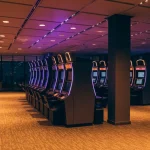
If you’re looking for a pokie machine in a Perth casino, the practical place to start is Crown Perth. It is Perth’s only legal land-based casino; Western Australia has no legal online casino market. The floor has more than 2,500 gaming machines, so there is plenty of choice—but that does not mean there is a published ranking of which one pays best.
I used to treat a bright cabinet or a big jackpot sign as a clue. It isn’t. When you’re standing at a machine, the useful details are the ones displayed with the game: its rules, paylines and prize table. Every legal pokie in Western Australia must show them. Take a moment to read the screen or information panel before putting money in. It tells you how that particular game is set up, rather than relying on a label such as “hot” or “high paying”.
The payout percentage is harder to compare. Most machines on Crown Perth’s floor operate within an RTP range of 87% to 92%, but Crown does not publish an RTP list for each individual machine. So you cannot use a public machine-by-machine table to pick the highest-paying pokie on the floor. A range across most machines is not the same thing as knowing the setting on the one you have chosen.
That distinction matters if you arrive expecting a neat answer to “which Australian pokie machine is best?” There isn’t enough information on a general floor-wide range to identify a single best machine, or to know that the particular cabinet beside you has the highest RTP. The displayed rules and prize table are still worth checking, but they do not turn a broad venue range into a specific machine’s payout percentage.
I’d also separate a pokie machine simulator from the cabinet in front of you. A simulator may let you explore a game’s layout or rules, but it does not tell you the RTP setting of a particular Crown Perth machine. For that, a general impression from a screen, a familiar game name or a practice session is no substitute for information tied to the actual machine.
RTP at Crown Perth
Most machines on the Crown Perth floor operate within an RTP range of 87% to 92%, though a public machine-by-machine list is not provided.
The sensible on-floor check is modest: find the machine’s rules, paylines and prize table, and make sure you understand what the game is showing before you start. If the information you want is a specific machine’s RTP, Crown Perth does not provide a public machine-by-machine list. That leaves a limit to what you can verify from published information.
No magic cabinet.
Game Features, Networked Jackpots and Feature Buys
A pokie can look familiar at first glance and still handle its bonus features very differently. Some keep the main game simple, while others build toward a feature round or connect a jackpot across a wider network. Those are different mechanics, not clues that one machine is a better choice.
Take networked progressives. Games such as Lightning Link, Dragon Link and Cash Express can be linked across multiple machines or casinos, contributing to a shared jackpot that grows across the network. That means the jackpot is not confined to the machine in front of you. The screen may make the prize feel personal; the pool behind it is shared. Big display, wider network.
That distinction matters when you see a jackpot label. A progressive prize can be presented as part of a particular game, but the prize pool may span other machines or venues. The name on the cabinet tells you which game you are playing; it does not, by itself, tell you how broad the jackpot network is.
Feature-buy slots work differently. Instead of waiting for the bonus to arrive through ordinary play, they let you pay an extra premium to trigger the feature directly. A specialist review describes these prices as often 50 to 100 times the base bet, but that is a reported range, not a universal setting. The amount and availability depend on the particular game.
The appeal is obvious: you skip the wait and go straight to the bonus round, often free spins. But buying access to a feature is not buying a result. The feature can still produce an outcome you do not like, and the extra cost is part of the wager. I learned to treat the button as a separate spending decision, not as a shortcut to a win.
Before using one, check what the game says the purchase triggers and what it costs at your selected bet. If the screen presents the offer as a special opportunity, strip away the wording and look at the mechanics: you are paying a premium to enter a bonus. That is all.
These features can make a game feel more varied, but they do not change the basic choice in front of you: play the ordinary rounds, pay to trigger a feature where that option exists, or leave the machine alone. A jackpot network and a feature-buy button are not the same thing, even when both are dressed up as ways to reach a bigger moment. Know which mechanism you are looking at. No magic button.
Pokie Odds: What a Spin Can—and Cannot—Tell You
I used to read a run of losing spins as a sign that a win had to be close. It felt logical at the time. It wasn’t. Each spin is independent: a pokie’s random number generator determines the outcome, and the previous result has no influence on the next one. A losing run does not make a payout due, and a recent win does not make another one more likely.
Attention: Each spin is independent; a losing run does not make a payout due, and a recent win does not make another one more likely.
That matters when you’re trying to judge pokie machine odds from what you see on screen. A short session can show a streak of wins, a stretch of nothing much, or a mix of both. None of those patterns tells you what the next spin will do. Sounds and animations can make a result feel dramatic, but they are presentation, not evidence that the machine is about to pay.
RTP is useful, but it answers a different question. It describes the share of all money wagered that a game returns to players across a very large number of spins. It is not a forecast for your session, nor a promise that you’ll get back a particular amount. You can play a game with a high RTP and still lose your stake quickly. You can also have a session that goes better than the long-run figure would suggest. Individual results vary. That’s the uncomfortable bit.
Volatility describes the pattern of payouts, not whether a game is a sure thing. Low-volatility pokies tend to pay smaller amounts more often. High-volatility ones pay less frequently, but a payout can be larger. So the same RTP can feel very different in practice: one game may produce more regular small returns, while another can leave longer gaps between payouts. Neither pattern makes a win certain.
When I’m deciding whether a pokie suits me, I try not to ask which one is the best pokie machine to win on. No odds description can promise that. I look at what the numbers actually describe: RTP is a long-run average, and volatility is about the frequency and size of wins. If I want frequent, modest payouts, a lower-volatility game may fit that preference better. It still might not pay during my session.
A pokie’s sounds can be enjoyable, but they don’t change its odds. And a run of near-misses—or anything that looks like a pattern—isn’t a clue about what comes next. I’ve chased those supposed signals before. Bad habit.
Think of odds as a way to understand a game’s design, not to predict a spin. They can help set expectations; they can’t tell you when to stop, or what the next result will be.
Real-Money Play: The Payment and Withdrawal Catch
A deposit menu can make an offshore casino look like an ordinary online service. I’ve learned not to mistake a familiar payment logo for proof that real-money pokie play is lawful in Australia—or that you have the same protections you’d expect from a local provider. Payment options do not change the legal position: operators cannot offer real-money online pokies to people in Australia.
A specialist review of offshore casinos describes payment methods that may be advertised to Australian customers, including Visa, Mastercard, bank transfer and, increasingly, Bitcoin or Ethereum. Treat that as a description of claims you may encounter, not as a recommendation or a guarantee that a method will work. Card logos in particular don’t settle whether a transaction is permitted or protected. Before entering payment details, read the terms and consider what happens if the operator disputes a deposit or refuses a withdrawal.
Depositing can feel straightforward; getting your money back may not. An offshore casino may leave a withdrawal pending for 24–72 hours. During that time, you might see a prompt to reverse it and return the balance to your account. That is a moment to slow down. Reversing a withdrawal puts the money back at risk in play, and the displayed balance is not the same as cash safely in your hands.
I used to read “fast payouts” as a promise. It is marketing until the withdrawal reaches you, and even then, a smooth payment does not give you local legal recourse if something goes wrong. Offshore casinos may not offer an effective way to resolve a dispute over withheld winnings. If the operator is outside Australia, pursuing a complaint can be difficult. That’s the catch.
Check the withdrawal terms before depositing, including any identity checks, stated processing steps and conditions attached to a payout. Keep copies of the terms and transaction records. These steps can help you understand what the operator claims, but they cannot guarantee payment or create Australian regulatory protection.
The payment screen is only one part of the decision. A real pokie machine app or website can show a balance and familiar deposit methods while leaving the crucial question unanswered: can you get your money out, and what recourse exists if you cannot? I wouldn’t let convenience answer that for me.
Pokie Apps and the Jackpot Label
An app icon can make a pokie feel like a separate product, but it is often just the doorway to a game or gambling service. I’d check what the app actually does before trusting its name or jackpot banner: is it a game for entertainment, or does it invite real-money play? That distinction matters in Australia, where operators cannot legally offer real-money online pokies to people here. A polished app does not change that.
I used to treat a jackpot label as if it meant the game on my screen held its own prize pool. That is not always what it means. Titles such as Lightning Link, Dragon Link and Cash Express can be linked across multiple machines or casinos, contributing to a progressive jackpot shared across that network. The screen may show one game, while the prize is connected to a wider group of machines.
That changes what to look for in the wording. Does the app explain whether the jackpot is local to one game or networked? Does it make clear what kind of play is being offered? A large jackpot figure can grab your attention, but it does not tell you that the app itself is the source of the prize, or that a particular player is likely to win it. Big label. Not a promise.
You may also see “pokie machine API” in descriptions aimed at developers or operators. An API is a technical way for software systems to communicate; the phrase alone does not establish that an app is official, that a jackpot is genuine, or that real-money play is lawful in Australia. I’d look for a clear explanation of the app’s purpose rather than treating technical language as proof.
The same caution applies to “best” app claims. Best for what: showing game information, offering free entertainment, or taking deposits for gambling? Those are very different things. If an app presents real-money pokies to Australians, a familiar game title or networked jackpot does not make the offer legal.
Understanding Networked Jackpots
Titles like Lightning Link, Dragon Link and Cash Express use progressive jackpots shared across multiple machines or casinos, meaning the prize pool is not confined to the single machine in front of you.
And if you are wondering about the cost of a pokie machine, separate that from the app’s claims. A jackpot amount is not the price of a machine, and an app label does not tell you what a physical machine costs. I would not infer either from promotional wording. Read what is actually being described. Skip the sparkle.
New Pokie Names and What a Feature-Buy Game Really Offers
A title can sound new without being a new release, and a familiar name can appear in different versions. I treat names as a starting point, not a recommendation. Chilli, Buffalo, Book of Dead and Mega Moolah are examples of pokie titles you may come across; that is not a complete list, and it does not rank them by quality or chances of winning.
When I first started paying attention to game names, I assumed a fresh-looking title meant there was something special about to happen. It didn’t. A name tells you very little about what a game will do for you. The useful details are in the rules and the options available on that particular version.
One option that can look tempting is a feature buy. Instead of waiting for the bonus feature to trigger through regular play, the player pays extra to enter it directly. A specialist review describes feature-buy prices in some games as ranging from 50 to 100 times the base bet. That is a reported range, not a price that applies to every game. Check the game’s own displayed rules before deciding what the option costs.
The word “shortcut” needs a little care. You may reach the bonus sooner, but buying access does not buy a winning result. The feature can still end without a payout that covers what you spent to enter it. I used to look at the button and think it was a way to skip the slow part. It skips the wait, not the risk.
Before using a feature buy, work out the total cost in the context of the amount you intended to play. If that price changes how much you are willing to stake, leave the button alone. A bonus animation can feel like the main event, but it is still part of the game, not a promise that the session will turn around.
So, when you see an unfamiliar title or a paid bonus option, read the rules rather than trusting the name or the presentation. New-looking isn’t a signal. A feature buy is simply another paid choice, and you can pass on it.
RTP and a Couple of Tips I Wish I’d Taken Earlier
I used to treat a higher RTP like a quiet promise that a session would go my way. It isn’t. RTP describes the share of wagers returned across a very large number of spins, not what you should expect from one visit. A high figure cannot guarantee a short-term win; individual sessions can swing widely.
There’s another detail worth checking before you settle in: the RTP setting for the specific game at the venue you’re using. Some providers let operators select from several settings for the same pokie, so a figure attached to a game name may not match the version in front of you. Check the game information or ask venue staff rather than assuming every copy is identical.
Volatility matters to how those swings feel. Lower-volatility games may suit you if you prefer smaller, more frequent wins. That preference doesn’t change the underlying uncertainty, though. I learned that the annoying way.
My most useful pokie machine tip is less exciting than any feature on the screen: decide on a loss limit before you start, and stop when you reach it. Don’t move the limit because a bonus looks close, or because the last few spins felt cold. Neither is a reason to expect the next spin to pay.
I also try to think of RTP as background information, not a strategy for picking a guaranteed winner. It can help you compare settings, but it cannot tell you what will happen during your session. Keep the limit. Keep expectations modest.
Is online gambling legal in Australia?
Real-money online pokie games cannot legally be offered to people in Australia. However, an Australian player does not commit an offence under the Interactive Gambling Act 2001 merely by playing with an offshore operator.
What law governs online gambling in Australia?
The Interactive Gambling Act 2001 governs interactive gambling in Australia. It makes it an offence for operators to offer real-money online pokie games to people in Australia.
Are online pokies legal for Australian players?
Operators cannot legally offer real-money online pokies to people in Australia, and no Australian licence exists for doing so. Australian players do not commit an offence under the Interactive Gambling Act 2001 merely by playing with an offshore operator.
Is there a strategy to win at pokies?
No strategy can predict or influence the next spin: each outcome is random and independent of previous spins. You can compare paytables, paylines and volatility, but that does not guarantee a win.